Short answer
KYB verifies the company, ownership and genuine activity, while KYC verifies relevant individuals. This is not a formality: the review determines whether and how a payment setup can be approved.
- Disclose the actual legal seller and beneficial owners.
- The website, documents and business description must align.
- Explain the product, customers, geography and settlement flow.
- Disclose intermediaries, additional domains and regulated activity.
1. KYB and KYC are different
Know Your Business covers the legal entity: its existence, authority, ownership structure, activity and risk. Know Your Customer or individual verification applies to directors, representatives, owners and beneficial owners to the required extent.
The review is not based on one document. Information is compared with registries, the website, contractual model and payment purpose. A formally complete pack may still require clarification when the product or settlement chain is unclear.
- legal entity and registration status;
- authority of the signatory;
- shareholders and ultimate beneficial owners;
- business reputation and activity profile.
2. Business-model review
The provider and bank need to understand every role: who sells, who performs, who pays and who receives funds. The review covers product, geography, average ticket, expected turnover, traffic sources, refund process and customer support.
Inconsistencies attract attention: one seller appears on the site and another in the contract; money is collected for third parties without an explained model; refund terms are missing; or the declared product cannot be verified.
- map the contractual and money flow;
- show the real customer journey;
- declare every domain and application;
- explain partners and agents.
3. Preparing the pack
Collect current corporate records, ownership information, representative documents, licenses where required and bank details. At the same time, make the website consistent with the application: legal notice, contacts, product, pricing, terms and refund policy.
Questionnaire answers should be specific and consistent. Label forecasts as forecasts. If the structure changes during the review, disclose the change before approval.
- check document validity dates;
- prepare legible copies and translations;
- appoint one process owner;
- track submitted document versions.
4. Decision and ongoing controls
The outcome may be approval, clarification, method or limit restrictions, or rejection. Keeping information current remains important after launch: ownership, product, domain or geography changes may trigger another assessment.
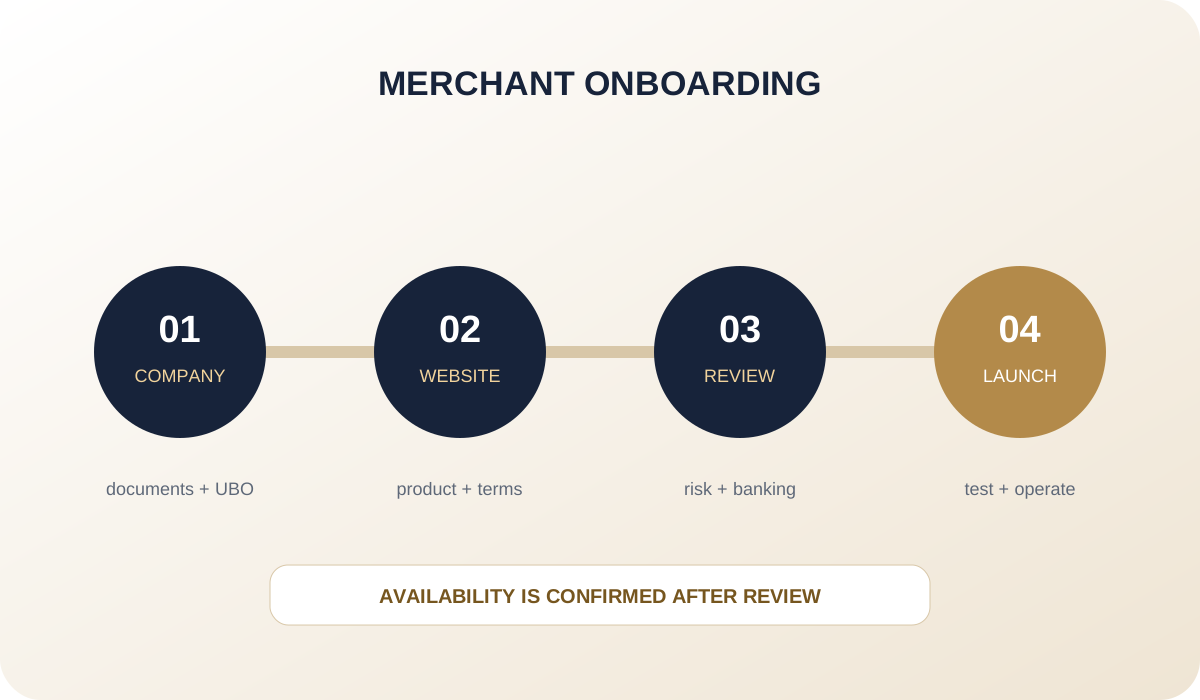
WHITECAPITAL performs an initial review and coordinates onboarding within available infrastructure. Rates, timing, limits and payment methods are confirmed only after assessment and in the relevant documents.
- do not treat a preliminary discussion as approval;
- report material changes;
- renew documents before expiry;
- retain evidence of genuine activity.
Questions and answers
Can a merchant connect without KYB/KYC?
No. WHITECAPITAL does not position payment acceptance as anonymous or automatic onboarding without review.
Why are additional documents requested?
The basic pack may not explain ownership, product, geography or the flow of funds. Requests depend on the specific risk.
Can verification be repeated?
Material changes to the company, owners, product, domains or geography may require updated information and reassessment.
Sources and policies
We use official payment-system information and WHITECAPITAL policies. Contractual documents prevail for an individual merchant setup.
This material is for operational orientation and is not a promise of approval, universal method availability, a fixed fee or settlement timing.